Antigua’s dockyard: read historical shelter without making a modern weather decision
A harbour’s historical reputation can sound like a present-day safety guarantee when it is detached from context. At Antigua’s naval dockyard, study why the setting mattered for ship repair and colonial interests, while keeping current marine and weather decisions separate. The educational task concerns a documented relationship between landform, work and power, not a recommendation to use a bay as a refuge.
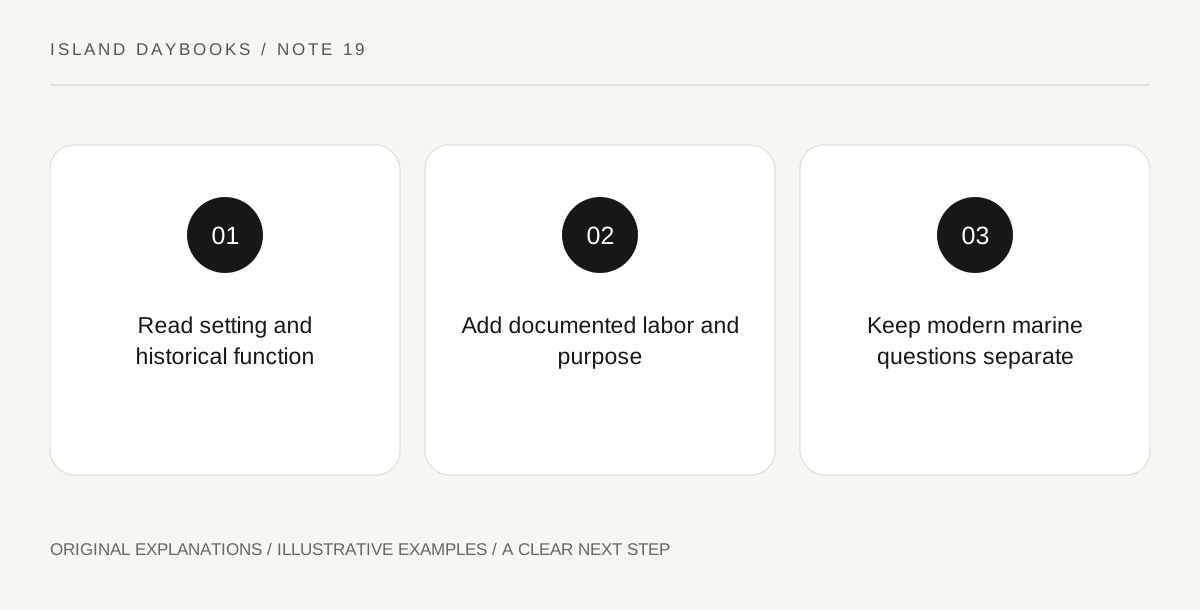
Original explanatory diagram. Read the full method and limitations below.
Begin with the historical function
UNESCO explains that deep, narrow bays surrounded by highlands contributed to the dockyard’s suitability for ship repair and historical shelter. Its account also identifies construction through generations of enslaved African labor and a role in protecting plantation interests. Keep those elements together. The site is not simply an attractive group of old waterfront buildings; its setting, work and colonial purpose are connected. None of this establishes present marine conditions or a visitor’s competence to make a boating decision.
Read the bay and the work as separate evidence
Use an official map or authorized view to identify the broad harbour shape described by the interpretation. Then select a labeled building or object that explains a repair-related role. Record what each source contributes. The map can clarify setting, while the interpreted feature explains a particular task. Do not assign a workshop function from a building’s appearance alone or turn a historic object into a practical repair method. The question is how the documented setting supported an institution, not how a traveler should operate within it today.
Keep the labor and economic purpose visible
Write a sentence about the labor context and another about the interests the institution served, using the source’s supported relationships. Avoid a neutral-sounding account in which a picturesque harbour simply attracted useful buildings with no people or power involved. At the same time, do not invent individual experiences absent from the interpretation. A bounded historical explanation can acknowledge structural relationships and unnamed work while leaving detailed biographies and particular decisions for appropriate further evidence.
Put present conditions in another category
If considering a modern boat activity, use the actual qualified provider and current responsible marine and weather authorities. A heritage statement about past shelter is not an operational assessment. End the cultural study with a paragraph connecting bay form, repair function and colonial context, followed by the explicit limit of the account. This allows an Antigua island day to explain the harbour’s history without letting an appealing historical phrase quietly become practical advice for conditions the article has not assessed.
Illustrative island notebook
Illustrative notebook: a traveler pairs an official harbour map with one interpreted repair-related feature. Their historical caption includes the documented labor and plantation-interest context. A separate box marks any modern boating question as requiring current qualified information. The phrase historical shelter remains historical; it is not used to approve an anchorage, a sailing plan or a decision to remain on the water in changing weather.
Questions that come up
Does historical shelter mean a bay is safe for my boat today?
No. This article supplies no marine assessment. Actual decisions require current conditions, responsible authorities and qualified judgment for the vessel and participants.
Can the dockyard story omit its labor context?
That would lose a relationship explicitly identified by the source. Include the documented labor and colonial purpose alongside architecture and setting.
References and scope
These sources support the factual background. Examples and exercises are original illustrative teaching material. References do not imply endorsement.
- UNESCO: Antigua Naval Dockyard and Related Archaeological Sites — Historical bay/repair relationship, enslaved labor and plantation-interest context; no present shelter, anchorage or weather-safety claim.