Brimstone Hill: distinguish who designed a fortress from who built it
A fortress caption can credit a colonial power while leaving the labor that made the structure possible unnamed. At Brimstone Hill on Saint Kitts, make attribution the subject of the visit. Separate design, construction and political purpose in the interpretation, keeping documented roles visible without inventing personal biographies where names and experiences are not supplied.
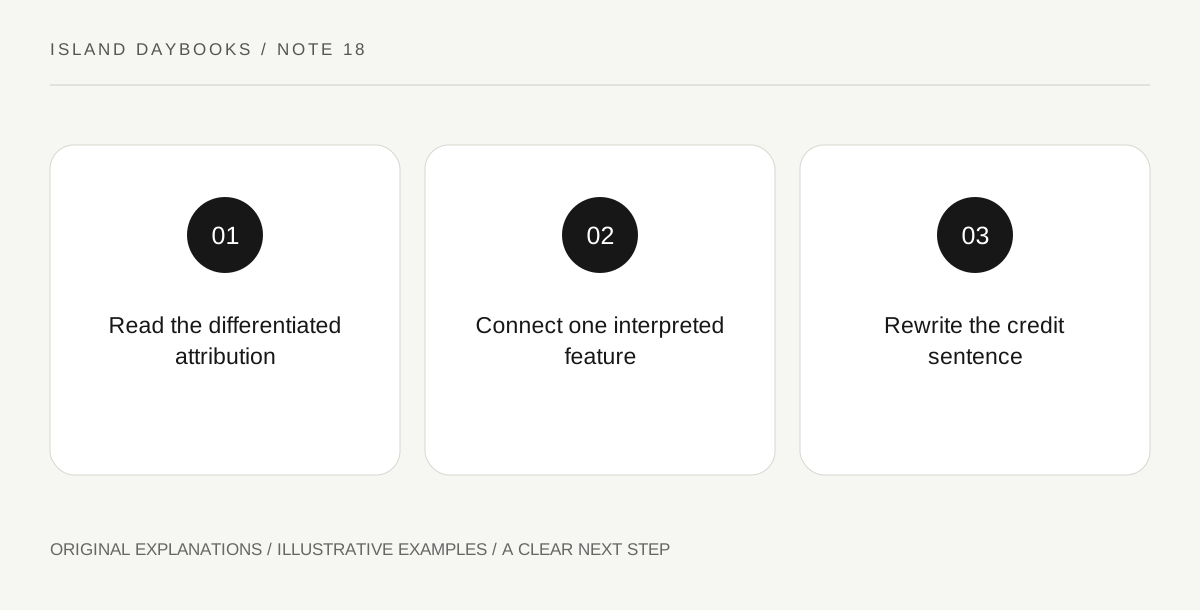
Original explanatory diagram. Read the full method and limitations below.
Read the attribution in the official account
UNESCO describes Brimstone Hill as military architecture designed by the British and built through the labor of enslaved Africans, within the history of colonial expansion and the slave trade. Preserve those distinctions rather than reducing them to a vague phrase such as British fortress. The source identifies different roles and unequal conditions. It does not provide a complete list of individual builders, and the absence of names should not be filled by fictional details presented as history.
Make a role table rather than a hero list
Create fields for design, building labor and the wider institutional or political context explained by the interpretation. Add names only when an appropriate source establishes them. Leave unknown entries explicit. The table’s purpose is not to make all roles appear equivalent; it is to prevent a familiar credit from swallowing the work and coercion described by the source. A short, accurate table can change the way a large structure is understood without requiring a traveler to pretend they have reconstructed its entire construction history.
Connect one visible feature with a bounded claim
Choose a feature identified by official interpretation and describe its form from an authorized visitor area. Then ask what the display actually establishes about its making or use. Do not deduce a worker’s individual experience from a stone surface or turn a weapon-related object into practical instruction. The physical observation can anchor attention, while the historical account supplies the relationship it cannot reveal alone. Keep the evidence connected without manufacturing a scene of work at the exact spot.
Write the credit sentence with care
End with a caption that includes the supported roles and the coercive context rather than celebrating engineering in isolation. Avoid invented quotations, dramatic reenactments or a false claim of giving an unknown person their own voice. A responsible account can acknowledge unnamed labor and explain why that gap matters. This gives a Saint Kitts heritage day a specific writing task: making the final description more accurate about who did what, while keeping the limits of the surviving and interpreted record visible.
Illustrative island notebook
Illustrative revision: a traveler’s first caption says British engineers built the fortress. After reading the official account, they separate British design from construction by enslaved Africans and preserve the colonial context. One interpreted architectural feature anchors the note. The final paragraph does not invent a builder’s name, speech or personal memory, and it makes no claim that a brief visit supplies the full history of the site.
Questions that come up
Is naming a colonial power enough to credit construction?
Not when the source distinguishes design from the labor that built the structure. Preserve the more precise attribution.
Can an unnamed worker’s biography be imagined for an educational caption?
A fictional exercise must be clearly labeled, and it should not be presented as site history. This notebook uses supported roles and explicit gaps instead.
References and scope
These sources support the factual background. Examples and exercises are original illustrative teaching material. References do not imply endorsement.
- UNESCO: Brimstone Hill Fortress National Park — British design, construction through enslaved African labor and colonial context; no invented individual biography or operational military instruction.