Settlement ideas3 min read
An island city can contain different ideas of urban organization within the same historic centre. In San Cristóbal de La Laguna, compare the interpreted Upper and Lower Town patterns through a small map exercise. The task is to recognize two documented planning histories without turning irregular into disorderly or planned into a claim of superior everyday life.
Read the guide ↗
Objects and structures3 min read
Large prehistoric stones can make an interpretation feel more certain than the evidence allows. In Menorca, use one officially identified Talayotic structure to separate its visible form from the function and meaning proposed for it. A careful confidence note can make the visit more interesting than a rapid collection of impressive shapes accompanied by invented ritual stories.
Read the guide ↗
Living environments3 min read
An island photograph can make the sea look like an empty colored surface. Ibiza’s marine heritage offers a different subject: the habitat beneath and around that surface. Use official interpretation of Posidonia seagrass to examine how a scenic view can conceal ecological structure, without treating the article as a snorkeling plan or a guide to identifying plants underwater.
Read the guide ↗
Objects and structures3 min read
A stone tower’s exterior can become the entire memory of an archaeological visit. At Su Nuraxi, pair that silhouette with an officially explained internal section. The task is to understand how a named structural form organizes space, while keeping a schematic drawing separate from construction instructions and leaving any interior access decision to the site’s current arrangements.
Read the guide ↗
Work and memory3 min read
A richly decorated villa can be remembered through images of elite comfort while the wider estate disappears. At Sicily’s Villa Romana del Casale, ask how the interpreted luxury relates to the property’s rural context. The exercise keeps decoration, status and work in the same inquiry without inventing the lives of people whose identities the available evidence does not establish.
Read the guide ↗
Settlement ideas3 min read
A concentrated historic city can make every turning seem like another essential stop. In Valletta, let a question about one documented institution set the scale of the visit. The aim is to understand a relationship among purpose, building and surrounding space, rather than using the density of monuments as a reason to fill every available hour with entries.
Read the guide ↗
Settlement ideas3 min read
An island settlement does not need a compact old-town square to have a legible organization. Djerba’s heritage subject is a low-density pattern shaped by environmental and social relationships. Use an official map and interpretation to examine how dispersed places can form a connected system, without treating quiet gaps as empty land available for a traveler to explore.
Read the guide ↗
Objects and structures3 min read
A prominent fort can visually overshadow the archaeological mound beneath it. At Qal’at al-Bahrain, use the concept of a tell to think about accumulated occupation rather than one monument standing on an ordinary hill. The task is to connect an identified upper structure with the interpretation of deeper layers, without assigning dates to exposed material from appearance alone.
Read the guide ↗
Living environments3 min read
A botanic garden can feel like a park until labels and interpretation reveal a different kind of organization. At Singapore Botanic Gardens, study how one interpreted plant or planting belongs to a scientific and educational institution. The question moves beyond whether a specimen is attractive, while avoiding identification guesses, medicinal advice or assumptions that every collection is publicly accessible.
Read the guide ↗
Work and memory3 min read
An island heritage landscape can carry living traditions as well as archaeological evidence. In Chief Roi Mata’s Domain in Vanuatu, focus on how official interpretation brings those forms of knowledge into relation. The aim is a respectful reading of the stated connections, without inventing a story, treating a burial place as a casual attraction or assuming that a map grants access.
Read the guide ↗
Living environments3 min read
A famous seed can become such a strong island symbol that the forest supporting it disappears from the visitor’s account. At Vallée de Mai on Praslin, begin with the coco de mer and deliberately widen the question. Use the reserve’s own interpretation to connect an iconic organism with the community of plants and ecological relationships around it.
Read the guide ↗
Work and memory3 min read
A mountain beside the sea can be marketed as a dramatic view while its human significance receives only a passing sentence. At Le Morne, begin with the interpretation of refuge, freedom and memory. The educational task is to understand the landscape’s documented meaning without treating a climb, a reenactment or an invented story of suffering as necessary to the encounter.
Read the guide ↗
Settlement ideas3 min read
A colonial port description can make a town seem to begin when outsiders established warehouses and official buildings. Levuka’s heritage interpretation offers a more specific relationship. Study how commercial development and indigenous communities are presented together, while keeping a visitor’s limited street observations separate from broad claims about local agency, identity or present everyday life.
Read the guide ↗
Living environments3 min read
A reef image can become shorthand for an entire island marine environment. New Caledonia’s lagoon heritage asks for a broader picture that includes associated habitats. Use the official description to build a conceptual habitat diagram, keeping ecological connection separate from a proposed swimming route, a species checklist or an assumption that every part of the system is visible in one excursion.
Read the guide ↗
Living environments3 min read
A volcanic island photograph can combine three different ideas in a traveler’s mind: the long formation of the island, a particular eruption and the conditions of a future visit. Separate those time scales before drawing conclusions. A desk-based comparison of official interpretation and dated imagery can be a complete learning task without chasing an active event or approaching a restricted area.
Read the guide ↗
Living environments3 min read
A name such as hot spring or boiling lake can make a geological feature sound like a holiday activity. In Dominica’s Morne Trois Pitons interpretation, keep the feature’s scientific description separate from any possible visit. A useful island-day study explains what the landscape account identifies without treating a suggestive name as an invitation to bathe, approach or follow an improvised route.
Read the guide ↗
Living environments3 min read
Two recognizable peaks can become such a strong island emblem that everything beyond their outlines disappears. Use the Pitons Management Area’s official description to compare the iconic view with the broader land-and-sea subject. The exercise asks what a silhouette makes memorable and what a map and ecological interpretation must add, without proposing a climb or a marine excursion.
Read the guide ↗
Work and memory3 min read
A fortress caption can credit a colonial power while leaving the labor that made the structure possible unnamed. At Brimstone Hill on Saint Kitts, make attribution the subject of the visit. Separate design, construction and political purpose in the interpretation, keeping documented roles visible without inventing personal biographies where names and experiences are not supplied.
Read the guide ↗
Work and memory3 min read
A harbour’s historical reputation can sound like a present-day safety guarantee when it is detached from context. At Antigua’s naval dockyard, study why the setting mattered for ship repair and colonial interests, while keeping current marine and weather decisions separate. The educational task concerns a documented relationship between landform, work and power, not a recommendation to use a bay as a refuge.
Read the guide ↗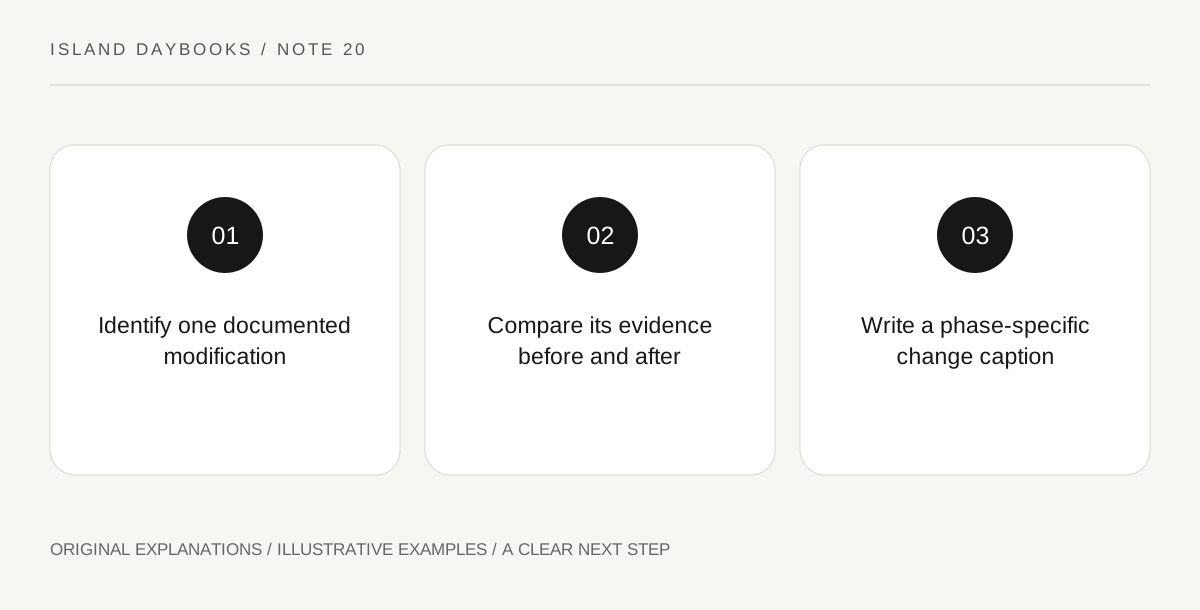
Objects and structures3 min read
A historic fort can be described as if its present form belongs to one founding moment. Around St George in Bermuda, use official interpretation to examine adaptation over time. Choose one documented change and ask what the surviving record establishes, keeping architectural history separate from military-operation advice or an assumption that every associated structure shares the same chronology.
Read the guide ↗